
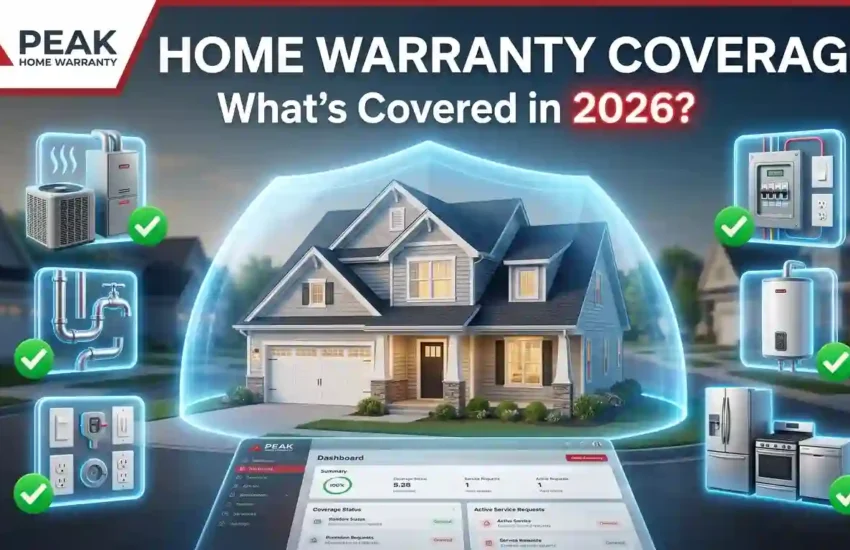
If you’ve ever woken up to a broken air conditioner in July or a dishwasher that decided to give up the ghost the week after Thanksgiving, you already know how expensive unexpected home repairs can be. A home warranty is designed to soften that financial blow — but most homeowners have no idea what it actually covers until they need to file a claim. This guide breaks down everything you need to know about home warranty coverage in 2026, including what’s included, what’s excluded, and how to choose the right plan for your home.
What Is a Home Warranty?
A home warranty is a service contract — not an insurance policy — that covers the repair or replacement of major home systems and appliances when they break down due to normal wear and tear. You pay an annual or monthly premium, and when something covered breaks, you call your provider, pay a service call fee (typically $75–$125), and a licensed repair technician comes out to diagnose and fix the problem.
It’s important to understand the difference right away: a home warranty covers mechanical failure of systems and appliances. Homeowners insurance, on the other hand, covers structural damage from events like fires, floods, or theft. These two products work side by side, but they are not the same thing. If you want a deeper breakdown, check out the detailed comparison on the Peak Home Warranty Why Choose Us page.
Home warranties are particularly valuable for:
- Buyers are purchasing older homes with ageing systems
- Homeowners who lack a large emergency repair fund
- Sellers looking to offer buyers peace of mind
- Landlords managing multiple rental properties
What Does a Home Warranty Cover? The Complete Breakdown
This is the question everyone asks — and the answer depends on the plan you choose. Most home warranty plans fall into three categories: systems-only plans, appliance-only plans, and combo plans (which cover both). Here’s what you can typically expect.
Home Systems Coverage
The home systems category is where a warranty really earns its keep. These are the expensive, complex parts of your home that cost thousands of dollars to repair or replace.
HVAC System Coverage
Your heating, ventilation, and air conditioning system is usually the most expensive item a home warranty will cover. Most standard plans include:
- Central air conditioning unit (compressor, coils, motors)
- Furnace (heat exchanger, burners, controls)
- Ductwork (internal leaks and failures)
- Heat pumps and thermostats
HVAC replacement can run $5,000–$12,000 without coverage. A home warranty can cover all or most of that cost. If you want to learn more about how HVAC protection works, explore Peak Home Warranty’s repair services for a clearer picture.
Plumbing System Coverage
Plumbing coverage typically includes leaks and failures within your home’s interior plumbing lines. Standard coverage includes:
- Leaks and breaks in water supply lines (inside the home)
- Drain lines (stoppages and breaks)
- Toilet repairs (tank components, flushing mechanisms)
- Faucets and shut-off valves
- Garbage disposal
- Sump pump (sometimes optional)
Note: Most plans do not cover main water line breaks outside the home’s foundation. That’s a coverage limit worth knowing upfront.
Electrical System Coverage
Electrical problems are not only expensive — they can be dangerous. Home warranty electrical coverage generally includes:
- Wiring (interior panels and circuit breakers)
- Electrical panels and sub-panels
- Ceiling fans
- Doorbell systems
- Smoke detectors (sometimes included)
Water Heater Coverage
Whether you have a traditional tank water heater or a tankless model, most home warranty plans cover parts and labour if your water heater fails. Given that a new water heater costs $900–$2,000 installed, this alone can justify the annual premium.
Home Appliance Coverage
Appliance coverage is what most people picture when they think of a home warranty. Standard appliance plans usually cover:
Kitchen Appliances
- Refrigerator (compressor, ice maker, cooling components)
- Dishwasher (motor, pump, controls)
- Built-in microwave (cooking components, turntable motor)
- Oven, range, and cooktop (burners, igniters, controls)
- Garbage disposal
Laundry Appliances
- Washing machine (motor, pump, transmission)
- Clothes dryer (heating element, motor, timer)
It’s worth noting that cosmetic damage — dents, scratches, broken door handles — is generally not covered. Coverage applies only to mechanical and electrical failures.
What Are Optional Coverage Add-Ons?
Standard home warranty plans cover the basics. But many homeowners need protection beyond the core list. Most providers offer optional add-ons for an additional monthly fee. Common add-ons include:
- Pool and spa equipment
- Septic system and pumping
- Well pump
- Roof leak repair
- Second refrigerator
- Stand-alone freezer
- Central vacuum system
- Garage door opener
- Lawn sprinkler system
If your home has a pool or you rely on a private well, these add-ons can be genuinely valuable. You can review available add-on options and customise your coverage on the Peak Home Warranty pricing plan page.
What Does a Home Warranty NOT Cover?
Understanding the exclusions is just as important as knowing what’s covered. Here are the most common items that fall outside standard home warranty coverage:
Pre-Existing Conditions
If a system or appliance was already broken, malfunctioning, or visibly damaged before your coverage began, the claim will likely be denied. This is why some providers require a home inspection before issuing a policy.
Cosmetic Damage
Cracked knobs, chipped enamel, broken handles, and similar cosmetic issues are not mechanical failures. They fall outside the scope of a service contract.
Improper Installation or Maintenance
If your HVAC system was installed incorrectly by a non-licensed contractor, or if you haven’t kept up with maintenance records (like annual filter changes), your provider may deny your claim. Documentation of regular maintenance is your best defence.
Code Violations
If your home’s electrical system violates local building codes, the home warranty won’t cover the cost of upgrades needed to bring it up to code. The warranty covers repair, not compliance.
Structural Items
Foundations, walls, roofs (in most base plans), windows, and doors are not covered under standard plans. Some providers offer roof leak coverage as an add-on, but full structural coverage is covered by homeowners’ insurance, not a home warranty.
Secondary Damage
If a broken appliance causes water damage to your floors, the water damage repair is not covered by the warranty. The warranty covers the broken appliance, not the resulting damage. That’s where homeowners’ insurance steps in.
Pest Damage
Termites, rodents, and other pests causing mechanical damage are excluded. Pest control is a separate category entirely.
How Does a Home Warranty Claim Work?
The claims process is simpler than most people expect. Here’s the typical workflow:
- You notice a covered item has failed.
- You contact your home warranty provider (phone, app, or online portal).
- The provider dispatches a contractor from their approved provider network.
- The technician diagnoses the issue and submits a report to the provider.
- The provider approves the repair or replacement.
- You pay the service call fee (typically $75–$125) — that’s usually your only out-of-pocket cost.
- The repair technician completes the work.
One thing to watch for: you generally cannot hire your own contractor and expect reimbursement. The warranty company controls the contractor dispatch process. If you go outside their network without authorisation, the claim will typically be denied.
For a full walkthrough of how claims work with a trusted provider, visit the Peak Home Warranty process page.
Home Warranty vs. Homeowners Insurance: What’s the Difference?
This is one of the most common points of confusion — and it matters.
Home Warranty covers: mechanical breakdown of systems and appliances due to wear and tear.
Homeowners’ insurance covers structural damage and loss of personal property from events such as fires, storms, theft, or flooding.
A home warranty does not replace homeowners’ insurance, and homeowners’ insurance does not replace a home warranty. You need both to be fully protected.
For example, if your HVAC system stops working due to normal wear and tear, that’s a home warranty claim. If a tree falls on your HVAC unit during a storm, that’s a homeowner’s insurance claim.
Are Home Warranties Worth It in 2026?
This is the honest question most homeowners are really asking. The answer depends on a few factors.
A home warranty makes strong financial sense when:
- Your home is more than 5–7 years old, and systems are ageing
- You’re buying a home and don’t know the full maintenance history
- You don’t have $5,000–$10,000 sitting in a repair reserve fund
- You own multiple systems that could fail simultaneously (HVAC, plumbing, water heater)
- You prefer predictable monthly costs over surprise repair bills
The average home warranty costs $400–$700 per year. A single HVAC repair or replacement easily exceeds that. According to data from the American Home Shield and industry reports, the average homeowner files 1.8 claims per year — meaning the math often works out in the homeowner’s favour.
A home warranty makes less sense when:
- Your appliances and systems are newly installed with active manufacturer warranties
- You’re a skilled DIY homeowner who handles most repairs yourself
- Your home is newly constructed with a builder’s warranty still in effect
For more context on whether a plan makes sense for your situation, the Peak Home Warranty FAQ page answers many of the most common questions homeowners have before committing.

Home Warranty Coverage for Older Homes
Older homes present a unique situation. Systems are more likely to fail, which makes a home warranty more valuable — but it also means providers will scrutinise pre-existing conditions more closely.
If you own a home built before 1990, here’s what to know:
- Get a home inspection before purchasing a warranty. Document current condition.
- Ask specifically about coverage limits for older systems. Some providers cap payouts for systems past a certain age.
- Look for plans that cover unknown pre-existing conditions, which some premium providers offer.
- Keep all maintenance records in a folder — HVAC service logs, plumber receipts, and electrician reports.
Annual coverage caps are a key detail with older homes. Many plans limit payout at $1,500–$3,000 per system per year. If your 20-year-old HVAC system requires a full replacement costing $8,000, you may receive only partial coverage. Understanding these policy limitations upfront prevents unpleasant surprises.
How to Choose the Right Home Warranty Plan
Not all plans are equal. Here’s what to evaluate before signing a service agreement:
Coverage breadth: Does the plan cover all the systems and appliances you actually use? Check the coverage list against your home’s specific equipment.
Coverage limits and caps: What’s the maximum payout per item or per year? This number matters more than the headline price.
Service call fee structure: Some plans charge $75 per call, others charge $125. A lower premium with a high service call fee can cost more overall if you file frequently.
Contractor quality: Does the provider use licensed, vetted technicians? Ask about their contractor dispatch standards.
Exclusions in the fine print: Read the contract terms carefully. The exclusions section will tell you more about a plan than the sales page will.
Response time: How quickly does the provider dispatch a technician after a claim is filed? In extreme weather, a 3-day wait for HVAC repair is a very different experience than a 24-hour response.
Renewal terms: Does the price increase significantly at renewal? Are there changes to coverage?
You can compare available service plans side by side at the Peak Home Warranty services page to find the tier that fits your home and budget.
How Much Does a Home Warranty Cost in 2026?
Home warranty pricing varies by provider, location, and coverage level. Here’s a general breakdown:
Basic systems-only plan: $350–$500/year Basic appliance-only plan: $300–$450/year Combo plan (systems + appliances): $450–$700/year Premium combo with add-ons: $700–$1,200+/year
Service call fees typically range from $65 to $125 per visit, depending on your plan tier.
To get an accurate estimate for your specific home, use the Peak Home Warranty cost calculator — it generates a customised quote based on your home size, location, and coverage needs.
Common Questions About Home Warranty Coverage (FAQ)
What does a home warranty cover?
A home warranty covers the repair or replacement of major home systems (HVAC, plumbing, electrical, water heater) and appliances (refrigerator, dishwasher, washer, dryer) when they fail due to normal wear and tear. Coverage details vary by plan.
What is not covered by a home warranty?
Standard exclusions include pre-existing conditions, cosmetic damage, improper installation, code violations, structural items, secondary damage caused by a covered failure, and pest damage.
Does a home warranty cover HVAC replacement?
Yes, in most cases. Most home warranty plans cover HVAC systems, including full replacement if the unit cannot be repaired. However, annual coverage caps may apply, so always check your policy’s coverage limits.
Does a home warranty cover plumbing leaks?
Yes, plumbing system coverage typically includes leaks and breaks in interior supply and drain lines. Most plans exclude main water lines outside the home’s foundation unless you purchase an add-on.
Is a home warranty the same as homeowners’ insurance?
No. A home warranty is a service contract that covers mechanical failure of systems and appliances. Homeowners insurance covers structural damage and property loss from events like storms, fires, or theft. You need both for comprehensive protection.
Can a home warranty replace appliances?
Yes. If a covered appliance cannot be repaired, most providers will authorise a replacement. The value of the replacement is typically limited to the appliance’s actual cash value or a set coverage cap, so check your contract terms.
Does a home warranty cover roof leaks?
Not under standard plans. Roof leak coverage is typically available as an optional add-on. It usually covers repair of leaks caused by normal wear, not storm damage (which is covered by homeowners’ insurance).
How do I file a home warranty claim?
Contact your provider by phone, app, or online portal, describe the issue, and they will dispatch an approved contractor. You pay the service call fee at the time of the visit. The technician submits findings to the provider, who approves repair or replacement.
Why Choose Peak Home Warranty?
There are dozens of home warranty providers in the market, and not all of them deliver when it counts. Peak Home Warranty stands out for several reasons.
First, they work with a vetted network of licensed repair technicians — meaning you’re not rolling the dice on who shows up at your door. Second, their plans are transparent, with clearly defined coverage limits and exclusions listed upfront rather than buried in dense contract language. Third, their customer service is structured around fast claim response times, which matters most when your HVAC goes down in August.
Whether you’re a first-time homeowner figuring out what coverage you need, or a seasoned homeowner who’s been burned by a previous provider, Peak Home Warranty offers plans built around real protection — not just a compelling sales pitch.
You can explore their full list of plan features and what sets them apart on the Peak Home Warranty features page, or read what actual customers have experienced on the testimonials page.
For an overview of all available service offerings, visit the Peak Home Warranty project page.
Final Thoughts: Home Warranty Coverage Is About Knowing Before You Need It
The worst time to discover what your home warranty doesn’t cover is when you’re standing in a kitchen full of water because your dishwasher pump failed. The best time is right now — before anything breaks.
A good home warranty plan covers HVAC systems, plumbing, electrical, water heaters, kitchen appliances, and laundry equipment. It has transparent coverage limits, a reasonable service call fee, and a contractor network you can trust. What it won’t cover is cosmetic damage, pre-existing conditions, and structural failures — those fall outside the scope of any service contract.
If you’re ready to stop wondering and start protecting your home with a plan that actually delivers, take the next step today.
Explore advanced protection options and get a customised quote at Peak Home Warranty — and see exactly what your home could be covered for in 2026.
Internal Resources Referenced:
- Why Choose Peak Home Warranty
- View All Repair Services
- How the Process Works
- Plan Features Explained
- Customer Testimonials
- Frequently Asked Questions
- Cost Calculator
- All Services Overview
- View Our Work

[…] Provider documentationReview the full service agreement, coverage list, and contract terms offered by your provider. Peak Home Warranty’s coverage details and plan descriptions are readily available through their website, including plans and what does home warranty covers. […]