
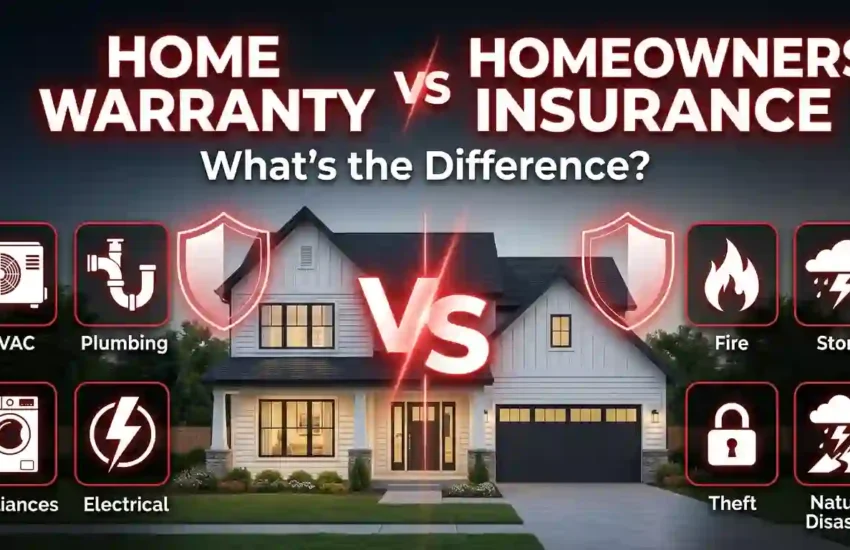
If you’re a homeowner, you’ve probably heard the terms “home warranty” and “homeowners’ insurance” used almost interchangeably. They’re not the same thing, and confusing the two can cost you thousands of dollars when something breaks down or gets damaged in your home. Understanding the difference between a home warranty and homeowners’ insurance isn’t just helpful; it’s essential for protecting your biggest investment.
In this guide, we’ll break down exactly what each one covers, how much they cost, when you need both, and how to choose the right protection for your home. Whether you’re a new homeowner or have lived in your house for decades, this article will give you the clarity you need to make smart decisions about your home’s protection plan.
What Is Homeowners Insurance?
Homeowners insurance is a policy that protects your home’s structure, your personal belongings, and you financially if someone gets injured on your property. Think of it as protection against the unexpected, fires, storms, theft, vandalism, and certain natural disasters.
Most mortgage lenders require homeowners’ insurance as a condition of the loan. This is a non-negotiable lender requirement because the home serves as collateral for the mortgage, and lenders want to ensure their investment is protected if disaster strikes.
What Does Homeowners Insurance Cover?
A standard homeowners insurance policy typically includes:
- Dwelling coverage – Repairs or rebuilds your home’s physical structure after fire damage, wind damage, or other named perils
- Personal property coverage – Reimburses you for stolen or damaged belongings like furniture, electronics, and clothing
- Liability coverage – Protects you if someone is injured on your property and sues you
- Additional living expenses – Covers hotel stays and food if your home becomes uninhabitable after a covered event
What Homeowners Insurance Does NOT Cover
This is where many homeowners get caught off guard. Homeowners insurance generally does not cover:
- Normal wear and tear on appliances or home systems
- Mechanical failure of your HVAC, water heater, or plumbing due to age
- Flood damage (requires separate flood insurance)
- Earthquake damage (requires separate earthquake insurance in places like California)
- Pest infestations
So, does homeowners’ insurance cover appliance repair? Generally, no, unless the appliance was damaged by a covered peril like fire or a burst pipe caused by a sudden, accidental event. If your refrigerator simply stops working because it’s old, your insurance company won’t pay for that. That’s where a home warranty comes in.
What Is a Home Warranty?
A home warranty is a service contract that covers the repair or replacement of major home systems and appliances when they break down due to normal wear and tear. Unlike insurance, which protects against sudden and accidental damage, a home warranty protects against everyday mechanical failures that come with owning a home.
What Does a Home Warranty Cover?
Home warranty coverage typically includes:
- HVAC coverage – Heating, ventilation, and air conditioning systems
- Plumbing coverage – Pipes, water heaters, and garbage disposals
- Electrical systems coverage – Wiring, outlets, and electrical panels
- Major appliances – Refrigerators, dishwashers, ovens, washers, and dryers
- Ceiling fans, ductwork, and built-in microwaves (depending on your plan)
If your 8-year-old water heater suddenly stops producing hot water, that’s a classic example of a mechanical failure caused by wear and tear, exactly the type of issue a home warranty is designed to handle. You’d contact your provider, pay a small service fee, and a contractor from their network would come to diagnose and repair the unit.
What’s Not Covered by a Home Warranty?
Every service contract comes with policy exclusions. Common exclusions include:
- Pre-existing conditions that existed before your contract started
- Cosmetic damage
- Issues caused by improper installation or lack of maintenance
- Structural damage to the home itself (this falls under homeowners’ insurance)
- Items not specifically listed in your contract
This is why reviewing your contract terms and understanding your coverage limits before you need to file a claim is so important.
Home Warranty vs Homeowners Insurance: Key Differences
| Feature | Homeowners Insurance | Home Warranty |
|---|---|---|
| Purpose | Protects against sudden, accidental damage | Covers wear-and-tear breakdowns |
| Required by lender? | Yes, typically mandatory | No, optional |
| Covers appliances? | Only if damaged by a covered peril | Yes, for mechanical failure |
| Covers structural damage? | Yes (fire, storms, named perils) | No |
| Covers HVAC/plumbing breakdown? | No | Yes |
| Annual cost | Varies by home value, location, coverage | Typically a flat annual premium or monthly cost |
| Claim process | File claim, adjuster inspects, payout issued | Call provider, contractor dispatched, service fee paid |
Do You Need Both Home Warranty and Homeowners Insurance?
In most cases, yes. They serve completely different purposes and fill different protection gaps.
Homeowners insurance is essentially mandatory if you have a mortgage; it’s a lender requirement, and even if you own your home outright, it’s foolish to go without it, given the financial risk of fire, storms, or liability claims.
A home warranty, on the other hand, is optional but highly valuable, especially if:
- You’re a new homeowner unfamiliar with the age and condition of your home’s systems
- You purchased an older home with ageing appliances and HVAC equipment
- You don’t have a large emergency fund set aside for unexpected repairs
- Your home’s major systems and appliances are approaching or past their expected lifespan
Think of it this way: homeowners’ insurance protects your home from catastrophe, while a home warranty protects your wallet from the slow grind of everyday breakdowns.
Is a Home Warranty Worth It?
This is one of the most commonly asked questions, and the honest answer is: it depends on your home’s age, your appliances’ condition, and your financial cushion.
Consider this practical example. Replacing an HVAC system can cost $5,000 to $12,000. A water heater replacement runs $1,000 to $2,000. A refrigerator repair or replacement can easily cost $500 to $2,500. If even one or two of these systems fail in a single year, a home warranty plan can pay for itself many times over.
According to general industry guidance from consumer protection resources such as the Federal Trade Commission, homeowners should always read the full contract terms, including coverage limits, exclusions, and the claims process, before purchasing any service contract. You can review general consumer guidance on service contracts at consumer.ftc.gov.
How Much Does a Home Warranty Cost?
Home warranty cost varies depending on your provider, location, and the level of coverage you choose. Generally, you can expect:
- Annual premium: Ranges based on plan tier and add-ons
- Service fee: A per-visit charge, paid each time a contractor is dispatched
- Optional add-ons: Pool equipment, septic systems, well pumps, and additional appliances often cost extra
Compare this to the cost of homeowners’ insurance, which is calculated based on your home’s value, location, rebuilding cost, claims history, and the coverage limits you select. Homeowners insurance rates by state vary significantly, homeowners in Florida and Texas, for example, often pay more due to hurricane risk, while homeowners in states with lower natural disaster risk may pay considerably less.
How to File a Claim: Home Warranty vs Homeowners Insurance
Filing a home warranty claim:
- Contact your provider by phone or online portal
- Describe the issue with your covered system or appliance
- A contractor from the provider’s network is dispatched
- You pay the service fee
- The contractor diagnoses and repairs (or recommends replacement)
Filing a homeowners’ insurance claim:
- Document the damage with photos and notes
- Contact your insurance company to report the claim
- An adjuster inspects the property
- You pay your deductible
- The insurer issues payment for covered repairs
Claim denial can happen with both types of coverage if the issue falls under an exclusion or pre-existing condition, which is why understanding your policy before you need it matters so much.
Why Choose Peak Home Warranty
If you’ve decided a home warranty makes sense for your situation, choosing the right provider matters just as much as the decision itself. Why choose Peak Home Warranty comes down to transparent contract terms, a reliable contractor network, and responsive customer service when you need a repair fast.
Unlike providers with confusing policy limitations and hidden exclusions, Peak Home Warranty focuses on straightforward home protection plans designed around real homeowner needs, covering the systems and appliances that matter most.
Final Expenses and Long-Term Home Protection Planning
When people think about final expenses, they often focus on funeral costs and estate planning, but homeownership costs are part of that bigger financial picture, too. If you’re planning for retirement or thinking about what you’ll leave behind for your heirs, having a home warranty in place can ease the burden on family members who may inherit a property with ageing systems and appliances.
A home warranty can often be transferred to a new owner, adding value when selling a home and giving buyers peace of mind about inherited maintenance costs.
Frequently Asked Questions
Is a home warranty the same as homeowners’ insurance? No. Homeowners insurance covers sudden damage from events like fire, storms, and theft, while a home warranty covers the repair or replacement of home systems and appliances that break down from normal wear and tear.
Does my mortgage require homeowners’ insurance? Yes. Nearly all mortgage lenders require proof of homeowners insurance before closing on a loan, and you must maintain coverage for the life of the mortgage.
Is a home warranty required by law? No. A home warranty is entirely optional and is a personal choice based on your home’s age, condition, and your financial situation.
What’s not covered by a home warranty? Pre-existing conditions, cosmetic issues, structural damage, and items not specifically listed in your contract are typically excluded.
Can I have a home warranty and homeowners’ insurance at the same time? Yes, and most homeowners benefit from having both, since they cover completely different types of risk.
Is a home warranty worth it for older homes? Often, yes. Older homes tend to have ageing HVAC systems, plumbing, and appliances that are more likely to fail mechanically, making a home warranty’s coverage especially valuable.
Conclusion
Understanding the difference between a home warranty and homeowners’ insurance puts you in a much stronger position as a homeowner. Homeowners insurance protects your home from catastrophic, sudden events, and your lender almost certainly requires it. A home warranty protects your wallet from the everyday breakdowns that come with owning major appliances and home systems.
For most homeowners, especially those with older homes or limited emergency savings, having both provides comprehensive protection. If you’re ready to explore coverage options tailored to your home’s needs, explore advanced services at Peak Home Warranty and discover a protection plan built around real homeowner priorities. Book a seat at the advanced services offered by Peak Home Warranty today and give your home the protection it deserves.

[…] When comparing home warranty coverage vs insurance coverage, think of a home warranty as a complement—not a replacement—for homeowners’ insurance. You can explore a detailed discussion of home warranty vs homeowners insurance here: home warranty vs homeowners insurance. […]